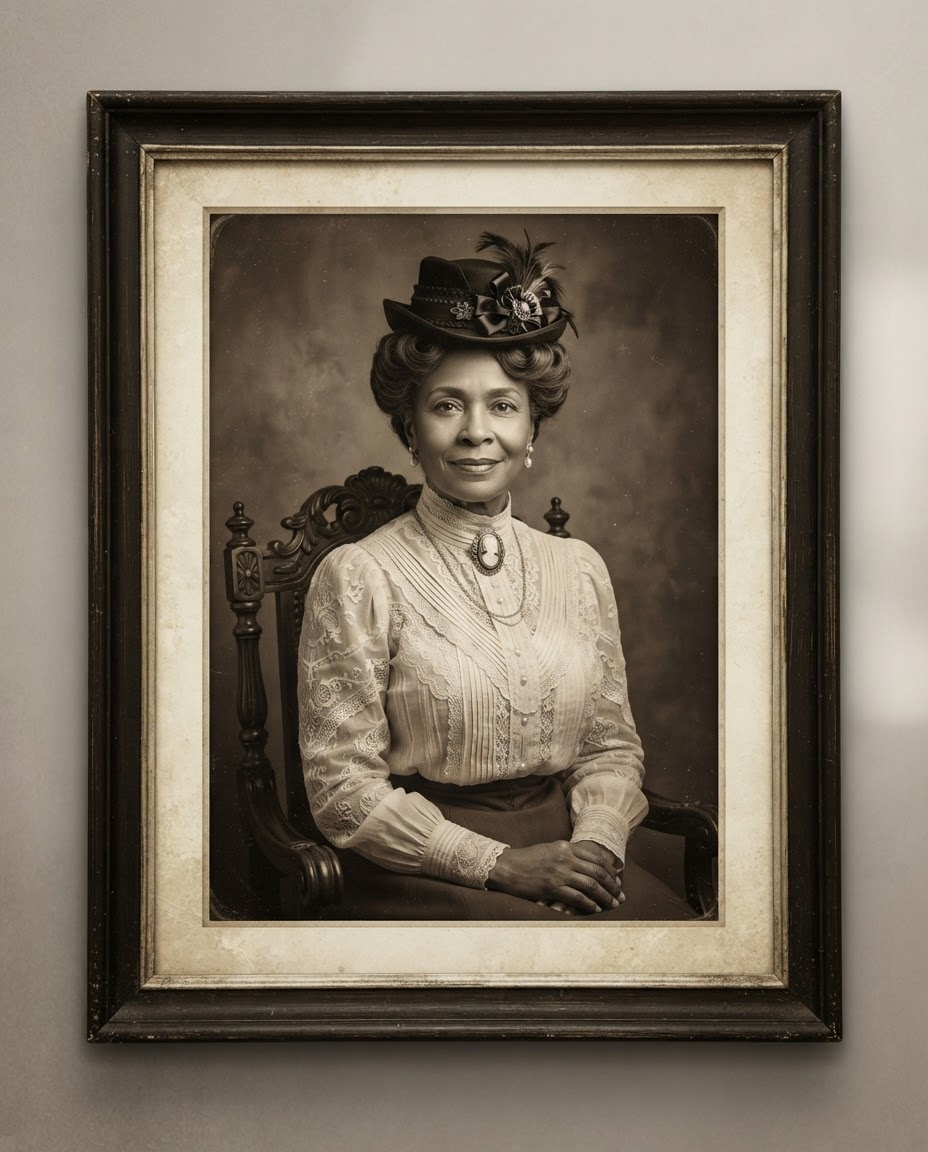
Maggie L. Walker
Banker & Civic Leader
“Let us put our moneys out at usury among ourselves, and rear our own sons and daughters to legitimate business and useful industry.”
Biography
Maggie Lena Walker was born in Richmond, Virginia, just two years before the end of the Civil War, to a formerly enslaved mother. A gifted student and organizer, she rose through the ranks of the Independent Order of St. Luke, a Black fraternal and economic self-help organization, eventually becoming its Grand Secretary. In 1903 she chartered the St. Luke Penny Savings Bank, becoming the first woman in the United States to found a bank and serve as its president. She also launched the St. Luke Herald newspaper and the St. Luke Emporium, a department store that offered fair prices and employment to Black Richmonders. When the bank merged into the Consolidated Bank and Trust Company in 1929, she remained its chairwoman through the Great Depression, guiding it to survive when many banks failed.
Major Accomplishments
- First woman in the United States to charter a bank and serve as its president — the St. Luke Penny Savings Bank (1903)
- Led the Independent Order of St. Luke to membership in the tens of thousands across multiple states
- Founded the St. Luke Herald, one of the most influential Black newspapers in Virginia
- Opened the St. Luke Emporium department store, offering quality goods and dignified employment
- Served on the boards of the Richmond branch of the National Urban League and numerous civic organizations
Historical Significance
Walker proved that Black financial institutions could provide the capital, credit, and safekeeping that mainstream banks denied to Black citizens. Her penny savings program taught thrift and homeownership to working-class families, and her enterprises created jobs when segregation closed most doors. She tied economic self-reliance directly to civil rights, arguing that a community that controls its own money controls its own destiny.
Legacy
The Consolidated Bank and Trust Company she led operated for decades as the oldest surviving Black-owned bank in America. Her Richmond home is now the Maggie L. Walker National Historic Site, and a statue in her honor stands in the city she transformed. Her philosophy — 'let us put our moneys out at usury among ourselves' — remains a founding principle of community-driven markets and cooperatives today.
Interesting Facts
She began her career at age 14 working for the Independent Order of St. Luke, earning $9 a month before becoming its leader.
The St. Luke Penny Savings Bank encouraged children to save by giving each young depositor a bank booklet to track their pennies.
Despite being partially paralyzed from 1928 onward, she continued to lead her bank from a custom-built wheelchair.
Her birthday, July 15, is celebrated in Richmond as Maggie L. Walker Day.
Sources & Further Reading
Credible references for the information presented on this page.