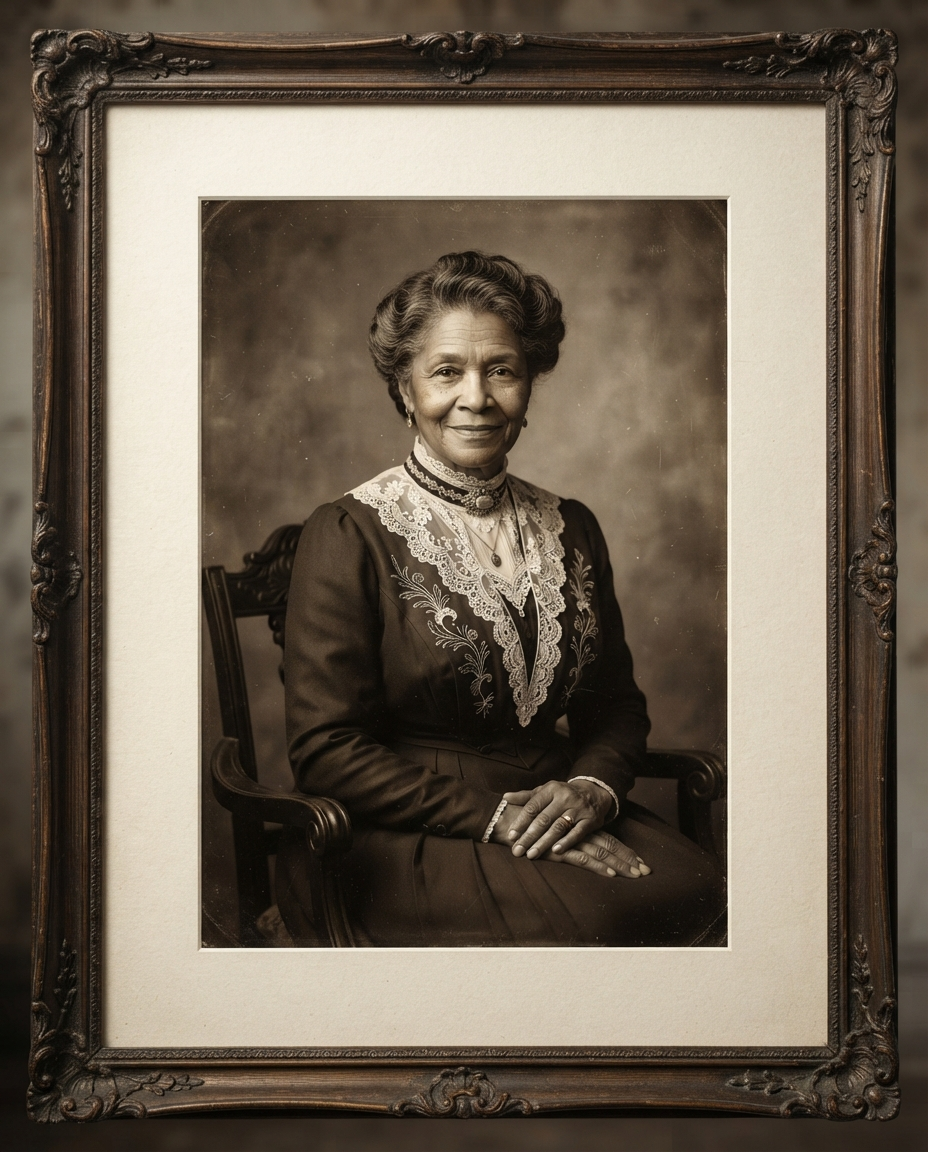
Madam C. J. Walker
Entrepreneur & Philanthropist
“I am a woman who came from the cotton fields of the South. From there I was promoted to the washtub. From there I was promoted to the cook kitchen. And from there I promoted myself into the business of manufacturing hair goods and preparations.”
Biography
Born Sarah Breedlove to formerly enslaved parents in Delta, Louisiana, Madam C. J. Walker rose from poverty to become one of the most celebrated entrepreneurs in American history. Orphaned at seven, she worked as a washerwoman in Vicksburg, Mississippi, and later in St. Louis, where she began experimenting with hair care remedies to treat a scalp condition that caused her own hair loss. In 1905 she moved to Denver and, drawing on her own formulations, developed the 'Walker System' of hair care products. She married Charles Joseph Walker, a journalist who helped her with advertising, and adopted the name Madam C. J. Walker. By 1910 she had established her headquarters in Indianapolis, building a factory, beauty school, and nationwide network of sales agents. At the height of her career she was widely recognized as the first self-made female millionaire in America.
Major Accomplishments
- Founded the Madam C. J. Walker Manufacturing Company, a hair care and cosmetics empire headquartered in Indianapolis
- Widely recognized as the first self-made female millionaire in the United States
- Trained and employed more than 20,000 sales agents, many of whom achieved financial independence for the first time
- Established the Lelia College beauty school to train 'hair culturists' in her Walker System
- A prolific philanthropist who contributed to the YMCA, anti-lynching campaigns, Black schools, and the Negro Welfare League
Historical Significance
Madam Walker built her business at a time when Black Americans were largely excluded from mainstream banking, credit, and commerce. Her company demonstrated that Black enterprise could thrive at national scale, and her business model — direct sales through trained agents — created an entire profession for Black women. She used her wealth and platform to champion economic empowerment as a pathway to racial equality, funding scholarships, anti-lynching efforts, and community institutions.
Legacy
Walker's legacy lives on in the generations of Black women entrepreneurs she inspired and in the economic independence her agents achieved. Her restored Indianapolis estate, Villa Lewaro, and the Madam Walker Theatre Center stand as monuments to her vision. She has been honored on a U.S. postal stamp, in the Guinness World Records, and in popular culture, including the Netflix series 'Self Made.' For markets like ours, she embodies the belief that commerce can be a vehicle for community uplift.
Interesting Facts
She donated the largest sum by an African American at the time — $5,000 — to the YMCA's anti-lynching fund drive in 1918.
Her daughter, A'Lelia Walker, became a legendary patron of the Harlem Renaissance, hosting salons known as 'The Dark Tower.'
She was one of the first American business owners of any gender or race to use mass advertising and branded packaging.
Madam Walker personally visited communities across the U.S. and the Caribbean, demonstrating products and recruiting agents.
Sources & Further Reading
Credible references for the information presented on this page.