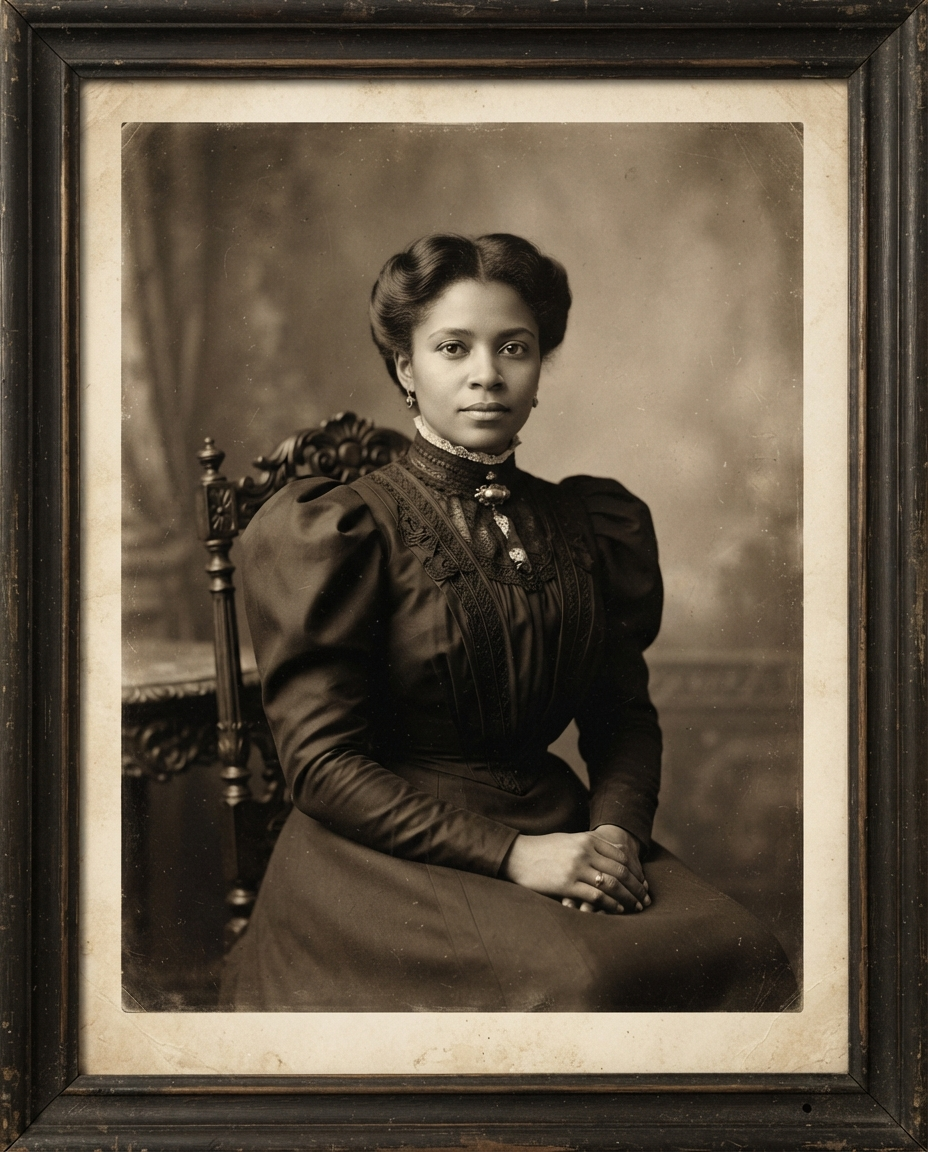
Ida B. Wells
Journalist, Investigator & Crusader for Justice
“The way to right wrongs is to shine the light of truth upon them.”
Biography
Born into slavery in Holly Springs, Mississippi, six months before the Emancipation Proclamation, Ida Bell Wells lost both parents and an infant brother to yellow fever at age 16 — then kept her family together by convincing officials she was 18 and could work as a teacher. She moved to Memphis, where she became a schoolteacher and co-owner and editor of the Memphis Free Speech and Headlight newspaper. After three of her friends were lynched in 1892, she launched a fearless investigative campaign against lynching, publishing data-driven exposés like 'Southern Horrors' and 'The Red Record' that documented the truth: lynching was terrorism used to suppress Black economic success, not the defense of honor its apologists claimed. When a white mob destroyed her Memphis press in her absence, she refused to be silenced, building an international anti-lynching movement from Chicago, where she also founded the Ida B. Wells Club, kindergartens for Black children, and the Alpha Suffrage Club to win Black women the vote.
Major Accomplishments
- Co-owner and editor of the Memphis Free Speech and Headlight, one of the most outspoken Black newspapers in the South
- Pioneered investigative data journalism documenting thousands of lynchings in 'Southern Horrors' (1892) and 'The Red Record' (1895)
- Co-founder of the NAACP in 1909 and founder of the Alpha Suffrage Club, the first Black women's suffrage organization in Chicago
- Led international anti-lynching speaking tours across Great Britain in 1893 and 1894
- Refused to give up her seat on a segregated railroad car in 1884 — 70 years before Rosa Parks — and sued the railroad
Historical Significance
Wells proved that truth, documented rigorously and published fearlessly, was a weapon against terror. Her central finding — that lynching targeted successful Black business owners, farmers, and professionals — directly connects the fight against racial violence to the struggle for Black economic prosperity. She was among the first American journalists to use statistics as investigative evidence, and her international campaigns made lynching a global human rights issue decades before that term existed.
Legacy
Long marginalized by history, Wells has been restored to her rightful place among America's greatest journalists and freedom fighters. In 2020 she was posthumously awarded a Pulitzer Prize Special Citation for her courageous reporting on lynching. Chicago renamed Congress Parkway in her honor, and her former home is a national historic landmark. Every data-driven exposé of injustice today follows the path Ida B. Wells cut.
Interesting Facts
In 1884 she sued the Chesapeake & Ohio Railroad after being forced off a first-class car and won a $500 verdict before it was overturned by the Tennessee Supreme Court.
She launched her anti-lynching crusade after her close friend Thomas Moss — co-owner of the successful People's Grocery cooperative — was lynched along with two colleagues in 1892.
After her press was destroyed, the Memphis Commercial Appeal wrote that she should be tied to a stake and branded — she never returned South, but never stopped writing.
She raised funds to support anti-lynching efforts by Frederick Douglass and corresponded with him, though she often found his establishment allies too cautious.
Sources & Further Reading
Credible references for the information presented on this page.