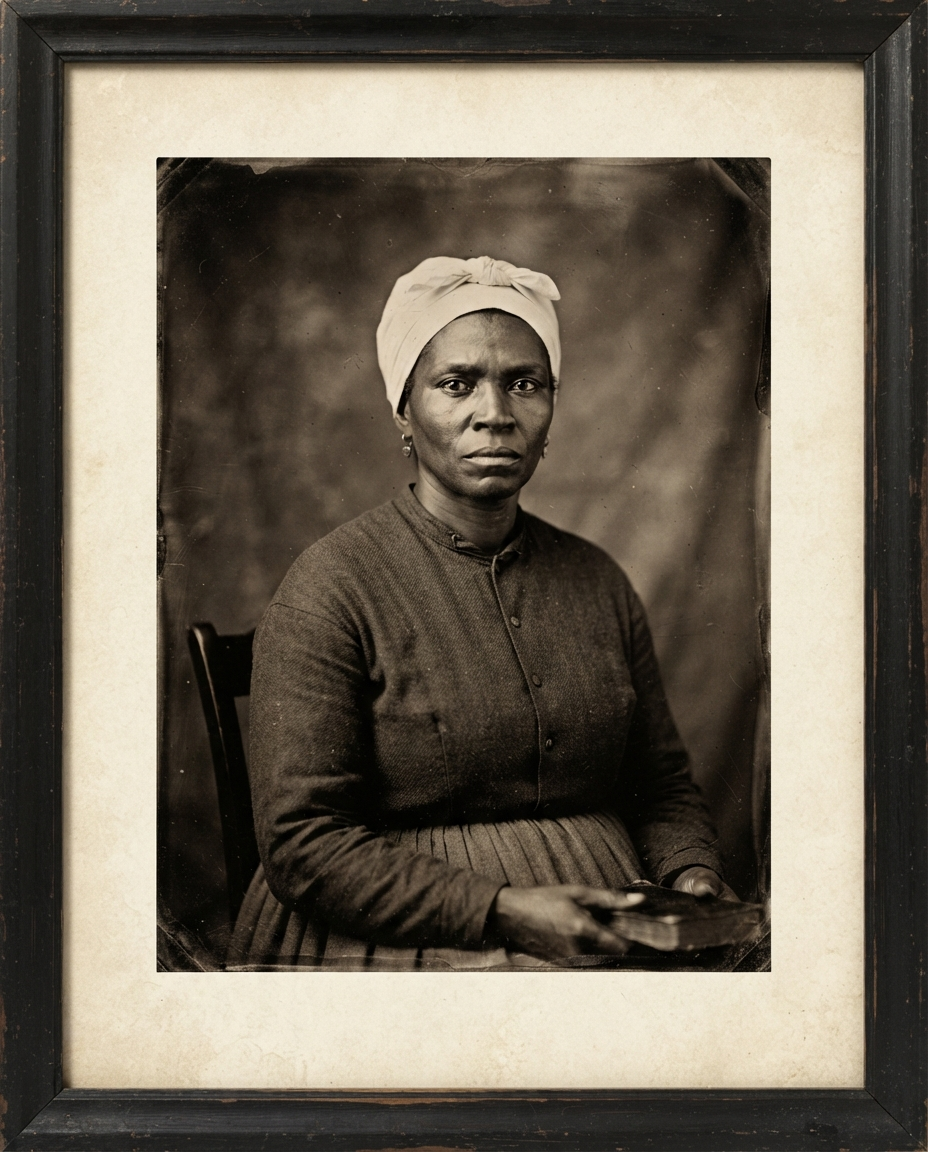
Harriet Tubman
Abolitionist & Conductor of the Underground Railroad
“I had reasoned this out in my mind; there was one of two things I had a right to, liberty or death; if I could not have one, I would have the other.”
Biography
Born Araminta Ross into slavery on Maryland's Eastern Shore, Harriet Tubman escaped to freedom in 1849 — then risked it all by returning again and again. Over the next decade she made roughly 13 missions into the South, personally guiding some 70 enslaved people to liberty via the Underground Railroad and providing instructions that helped dozens more find their way. During the Civil War she served the Union Army as a nurse, cook, scout, and spy, and in 1863 became the first woman to lead an armed military expedition in the war — the Combahee River Raid, which liberated more than 700 enslaved people. After the war she settled in Auburn, New York, where she cared for her family, championed women's suffrage, and founded the Harriet Tubman Home for the Aged.
Major Accomplishments
- Led approximately 70 people to freedom in person and never lost a single passenger on the Underground Railroad
- First woman to lead an armed expedition during the Civil War — the Combahee River Raid liberated over 700 enslaved people
- Served as a scout and spy for the Union Army, providing critical intelligence on Confederate supply lines
- Founded the Harriet Tubman Home for the Aged in Auburn, New York
- A lifelong advocate for women's suffrage who worked alongside Susan B. Anthony
Historical Significance
Tubman transformed freedom from an abstraction into an act of extraordinary courage and organization. Her success proved that enslaved people were agents of their own liberation, and her wartime service shattered contemporary assumptions about what women — especially Black women — could do. She linked the fight against slavery directly to the fight for women's rights, insisting that both causes were one struggle for human dignity.
Legacy
Tubman is among the most beloved figures in American history. Two national parks honor her — the Harriet Tubman Underground Railroad National Historical Park in Maryland and the Harriet Tubman National Historical Park in New York. In 2016 the U.S. Treasury announced plans to feature her portrait on the $20 note, which would make her the first woman and first African American on U.S. currency. Her life remains the definitive American story of courage, faith, and the refusal to leave anyone behind.
Interesting Facts
Slaveholders offered a $40,000 bounty for her capture — yet she was never caught and never lost a passenger.
She suffered severe head injuries as a teenager when an overseer's two-pound metal weight struck her skull, causing vivid visions and sleeping spells she interpreted as divine guidance for the rest of her life.
She carried a revolver on her rescue missions to discourage anyone from turning back and endangering the group.
She lived to an estimated age of 91, outliving nearly all of her contemporaries from the Underground Railroad.
Sources & Further Reading
Credible references for the information presented on this page.