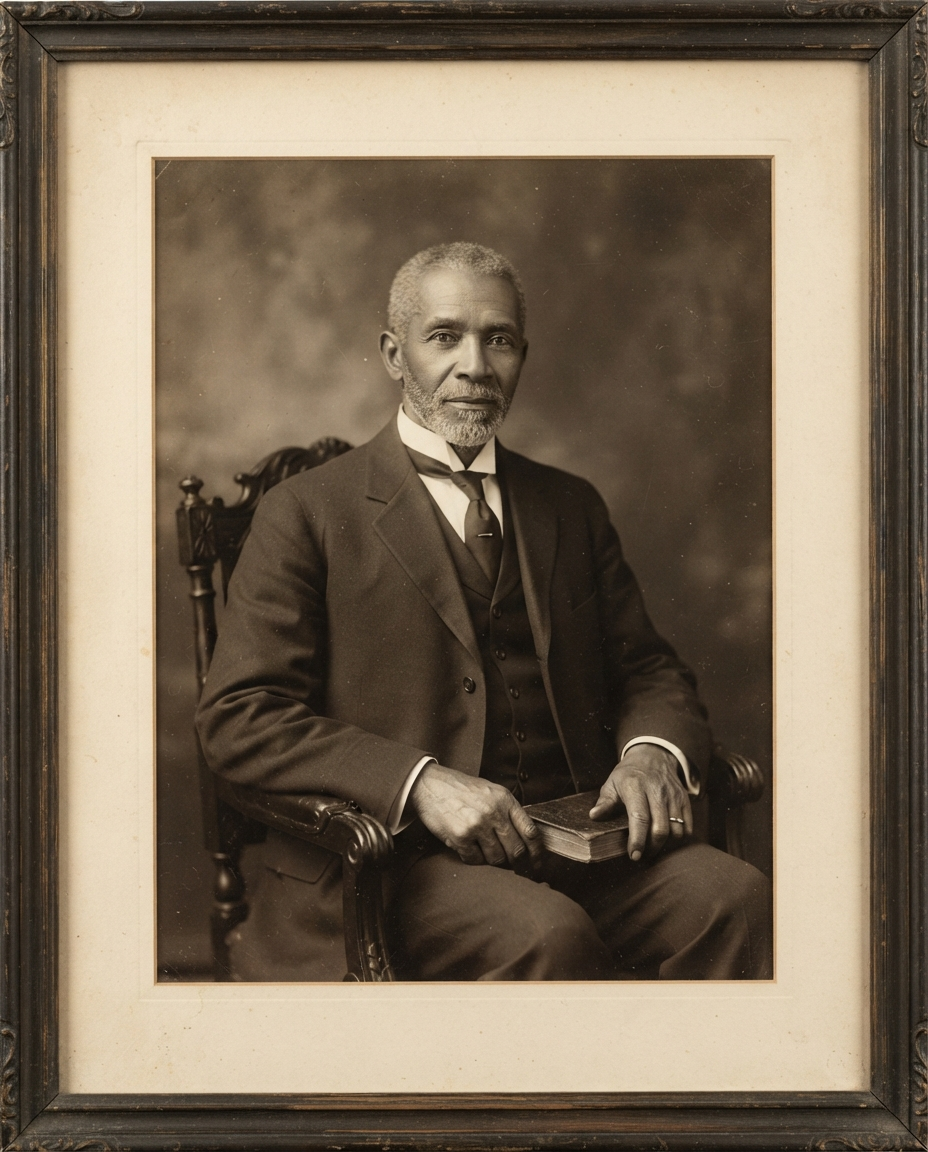
Booker T. Washington
Educator & Institution Builder
“Cast down your bucket where you are... Cast it down in agriculture, mechanics, in commerce, in domestic service, and in the professions.”
Biography
Booker T. Washington was born enslaved on April 5, 1856, in Hale’s Ford, Franklin County, Virginia. After emancipation, he pursued an education at Hampton Institute, where he studied and worked to pay for his schooling. In 1881, he founded the Tuskegee Normal and Industrial Institute in Alabama; the school later became Tuskegee University. Washington became a nationally prominent educator and public spokesman for Black education and economic advancement. His approach emphasized vocational and industrial education and economic opportunity, while his public accommodation of segregation drew criticism from other civil rights advocates.
Major Accomplishments
- Founded and built Tuskegee Institute into one of America's leading Black educational institutions
- Recruited George Washington Carver to Tuskegee, launching one of history's great scientific careers
- Organized the National Negro Business League in 1900, the first national network of Black entrepreneurs
- Authored 'Up from Slavery' (1901), one of the most widely read autobiographies in American literature
- Raised millions of dollars from Northern philanthropists for Black schools across the South
Historical Significance
Washington's advocacy of vocational and industrial education and economic advancement shaped important debates about Black education and civil rights in the late nineteenth and early twentieth centuries. W. E. B. Du Bois and other advocates criticized aspects of Washington’s accommodationist approach and disagreed with him over vocational education, political rights, and the need to challenge racial discrimination. These disagreements reflected differing strategies and priorities in the struggle for Black freedom, not a simple divide between reasonable and unreasonable leaders.
Legacy
Tuskegee University thrives today as a center of education and research. Washington's philosophy of building Black economic power from the ground up directly inspired the entrepreneurial districts celebrated at Black Wall Street Market. His autobiography remains a touchstone of American self-determination, and his founding of the National Negro Business League established a template for Black business networks that persists a century later.
Interesting Facts
On September 18, 1895, Washington delivered the address later known as the Atlanta Compromise at the Cotton States and International Exposition. He emphasized vocational and industrial education, economic advancement, and cooperation between Black and white Americans. The speech was controversial because its accommodation of segregation appeared to accept racial separation.
He was the first African American invited to dine at the White House as a guest of the president, in 1901.
Tuskegee students manufactured the bricks used to construct the school's own buildings, and then sold bricks commercially to pay debts.
He secretly contributed funds to legal cases challenging voting restrictions in Alabama and other Southern states.
Sources & Further Reading
Credible references for the information presented on this page.