Indigo Embodied Studios LLC
Back to Archive

Frederick Douglass

c. February 1818 – February 20, 1895 Talbot County, Maryland
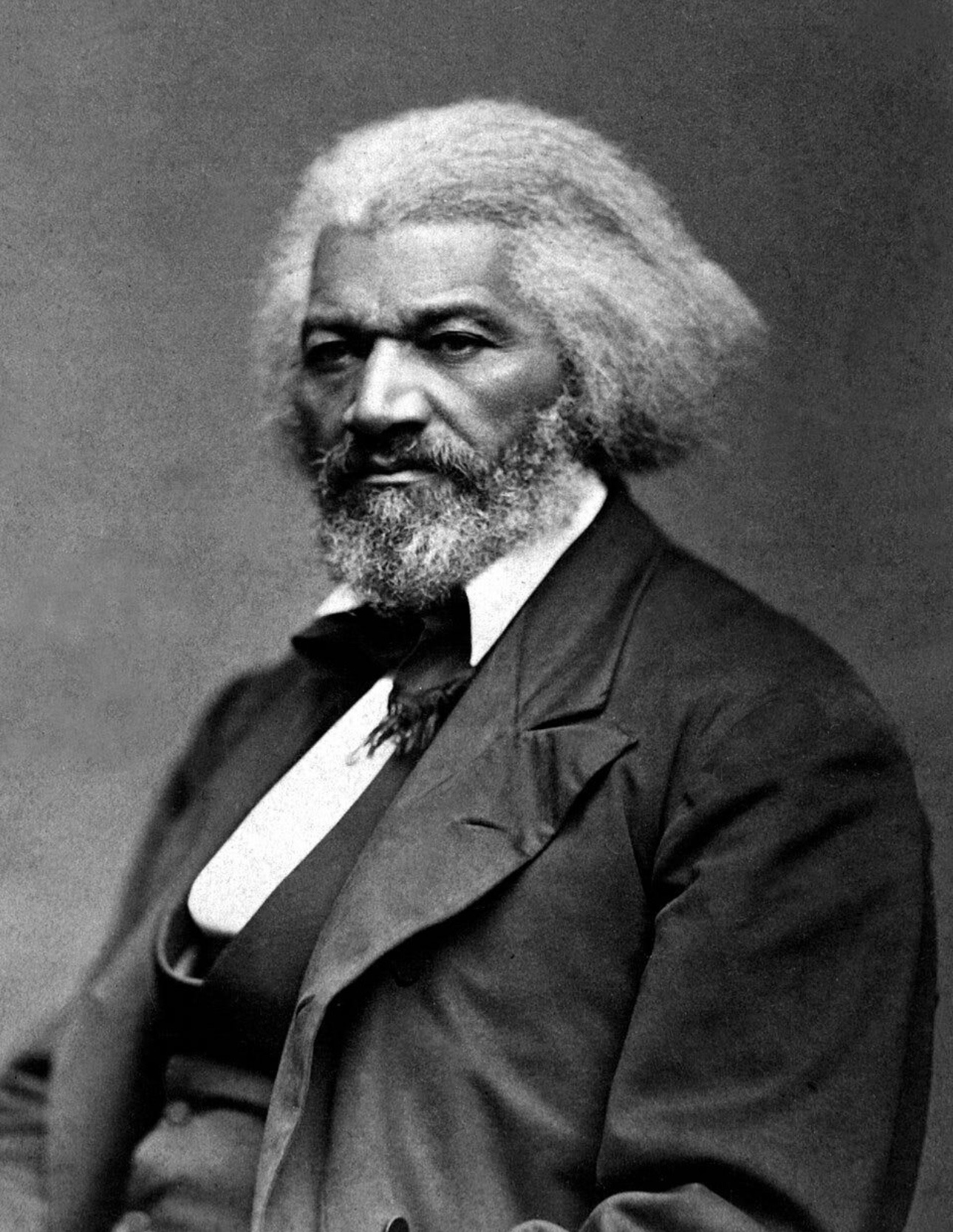
Portrait of Frederick Douglass

Who They Are

Frederick Douglass was an orator, statesman, and abolitionist leader whose powerful writings and speeches defended the humanity of enslaved people and provided intellectual leadership for the abolition movement.

Their Story

Born Frederick Augustus Washington Bailey into slavery on Maryland's Eastern Shore, Frederick Douglass taught himself to read and write in secret, escaped to freedom in 1838, and emerged as the most powerful orator of the 19th century. His 1845 autobiography, 'Narrative of the Life of Frederick Douglass, an American Slave,' became an international bestseller and a devastating indictment of slavery. After a two-year speaking tour of Great Britain, where supporters purchased his legal freedom, he returned to found the North Star newspaper in Rochester, New York — one of the most influential abolitionist publications in America. He advised President Lincoln during the Civil War, fought for the enlistment of Black soldiers, and after the war held federal appointments including U.S. Marshal for the District of Columbia and Minister to Haiti.

Major Accomplishments

  • Author of three autobiographies, including the classic 'Narrative of the Life of Frederick Douglass' (1845)
  • Founded and edited the North Star and Frederick Douglass' Paper, leading abolitionist newspapers
  • Recruited Black soldiers for the Union Army
  • First African American nominated for Vice President of the United States (1872)
  • Served as U.S. Marshal for the District of Columbia and U.S. Minister Resident to Haiti

Impact & Legacy

Douglass's home, Cedar Hill in Washington, D.C., is a national historic site, and his words are quoted by every generation fighting for justice. He mentored Ida B. Wells and countless others, and his insistence that 'power concedes nothing without a demand' became a motto of movements for civil rights.

Did You Know?

He chose the surname 'Douglass' after escaping, inspired by Sir Walter Scott's poem 'The Lady of the Lake'

He was the most photographed American of the 19th century

He was the first Black attendee to speak at the Seneca Falls Convention in 1848

Sources & Learn More

Credible references for the information presented on this page.