Indigo Embodied Studios LLC
Back to Archive

Buffalo Soldiers

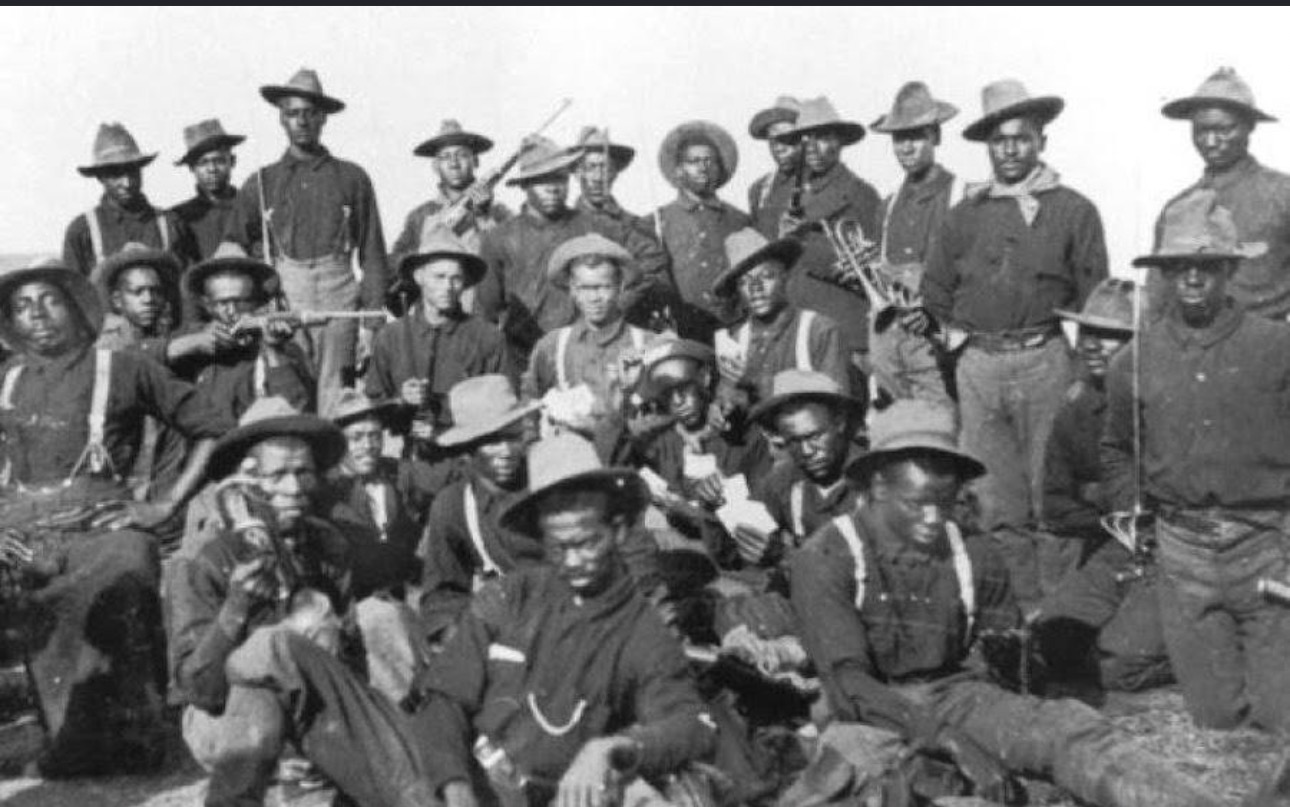
Portrait of Buffalo Soldiers

Who They Are

The term 'Buffalo Soldiers' became associated with Black U.S. Army troops, especially the 9th and 10th Cavalry and the 24th and 25th Infantry formed after the Civil War.

Their Story

The Army Reorganization Act of 1866 authorized six Black regular Army regiments: the 9th and 10th Cavalry and the 38th, 39th, 40th, and 41st Infantry. In 1869, the four infantry regiments were consolidated into the 24th and 25th Infantry. The nickname 'Buffalo Soldiers' initially referred to the 10th Cavalry and was later associated with all four regiments. Its precise origin remains uncertain; historical accounts propose, among other explanations, comparisons between soldiers’ hair and buffalo fur or between their courage and endurance in combat and the buffalo. The regiments served on the Western frontier, where they took part in U.S. campaigns against Indigenous peoples and enforced federal policies that supported westward expansion, displacement, and confinement on reservations. These actions affected Indigenous nations and belong in the history of the regiments’ service. The units were segregated in a discriminatory military system; enlisted men were Black and most early officers were white, though a small number of Black men received commissions. Their service and individual achievements, and the racism they faced in the Army and wider society, varied across people and units. Regiments did not all participate in every campaign.

Major Accomplishments

  • Served in the 9th and 10th Cavalry and, after the 1869 consolidation, the 24th and 25th Infantry
  • Some Buffalo Soldier units served in the Spanish-American War and the Philippine-American War
  • Some soldiers served as early caretakers of Yosemite and Sequoia national parks, protecting parklands, fighting fires, and building roads and other infrastructure
  • Served in a segregated U.S. Army and persevered amid racial discrimination

Impact & Legacy

The history of these regiments includes military service and individual accomplishment, racial discrimination within the Army and society, and participation in federal campaigns that advanced westward expansion and dispossessed Indigenous peoples. Their experiences and roles differed by regiment and individual.

Did You Know?

A small number of Black officers served in the regiments during their early decades, while most officers were white.

Some Buffalo Soldier units served in national parks as well as in overseas conflicts.

Sources & Learn More

Credible references for the information presented on this page.